
Home / Projects / Humanitarian hubs
Case study · Off-grid & hybrid solar · Borno State
Solar power for eight humanitarian hubs in Borno State
Design, supply, installation, commissioning and three-year operations & maintenance of solar-plus-storage systems for an international humanitarian organisation.
Hubs
8 locations
Solar PV
1,138.8 kWp
Battery storage
6,515 kWh
Generator use
Under 5%

The solar carport at the largest hub in Maiduguri, built to add capacity where roof space ran out.
The challenge
The hubs house and support aid agencies working across North-East Nigeria. Before solarization they ran almost entirely on diesel generators, many for up to 16 hours a day, with fuel moved along insecure roads, frequent outages and high running costs.
• Eight remote hubs, several near the Cameroon border, needing coordinated logistics and security clearance for every delivery.
• The September 2024 Maiduguri flood cut access and delayed materials mid-project.
The solution for the humanitarian hubs in Borno State
Before we designed anything, we visited every hub in July 2024. We found gaps in the original design, so we recommended bigger systems where the hubs needed them. Then we designed each hub on its own terms, from a 500 kW grid-connected hybrid at the largest hub to fully off-grid systems at the border hubs.
• Deye high-voltage hybrid inverters at six hubs, with JinkoSolar bifacial panels and containerised HV lithium storage.
• Victron and Fronius AC/DC-coupled systems at Bama and Monguno. Bama reuses good inverters and batteries moved from another hub; Monguno keeps its existing roof array.
• Temperature-controlled power rooms that protect inverters and batteries from Sahelian heat and dust.
• Two-layer load control: lights, IT, communications and security stay on 24/7; air conditioners, water heaters and kitchen equipment switch off at 40% battery and come back on at 60%.
• Solar carports at the largest hub to add capacity where roof space ran out.
• Remote monitoring on DeyeCloud and Victron VRM, shared with the client's technical team.
• 48 to 72-hour load tests at every hub, plus hands-on training for hub managers.
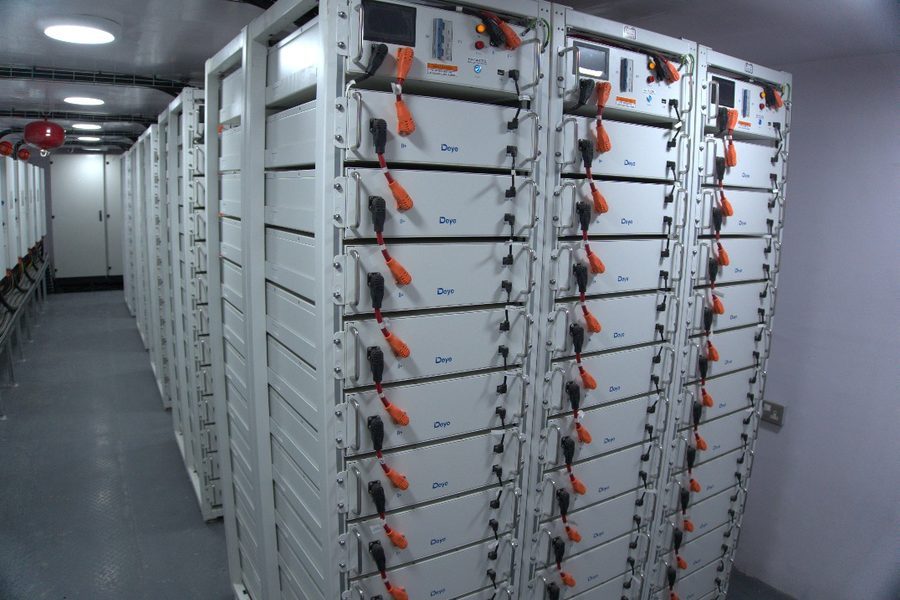
Deye high-voltage lithium battery racks in the temperature-controlled container.
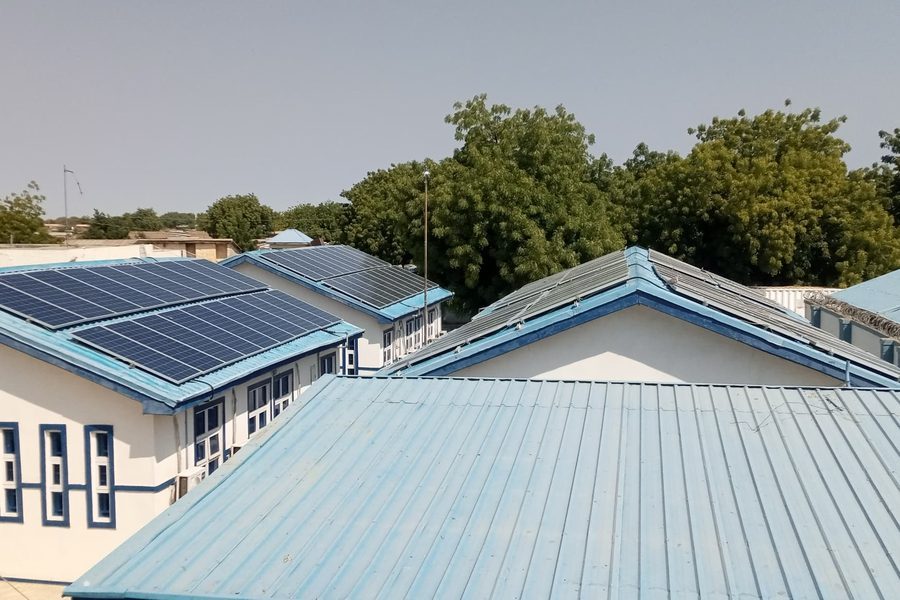
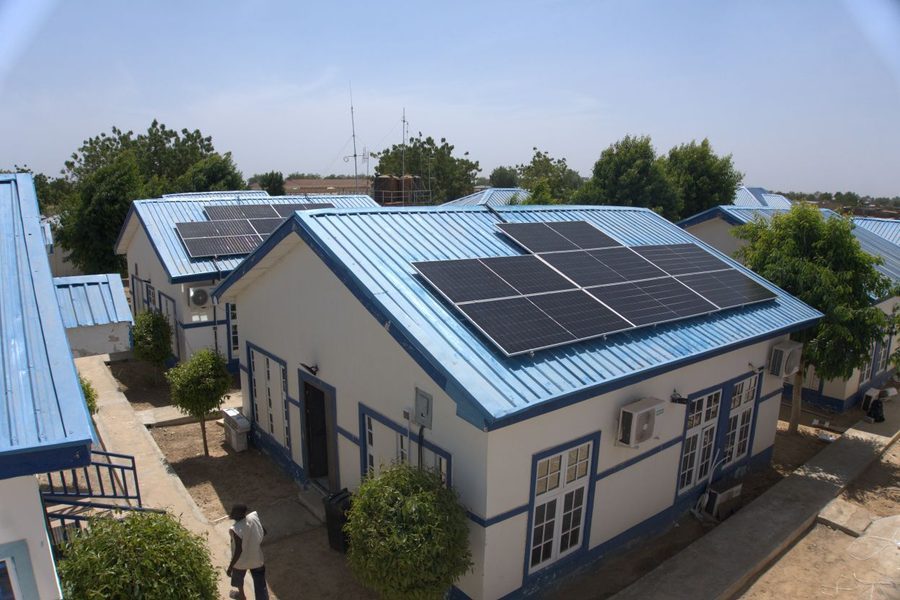
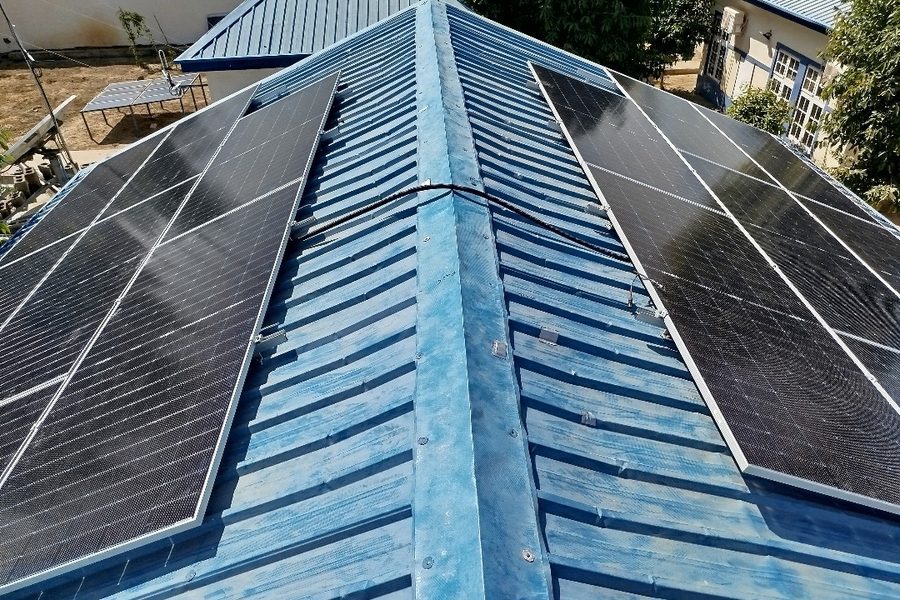
Rooftop solar at one of the eight hubs.
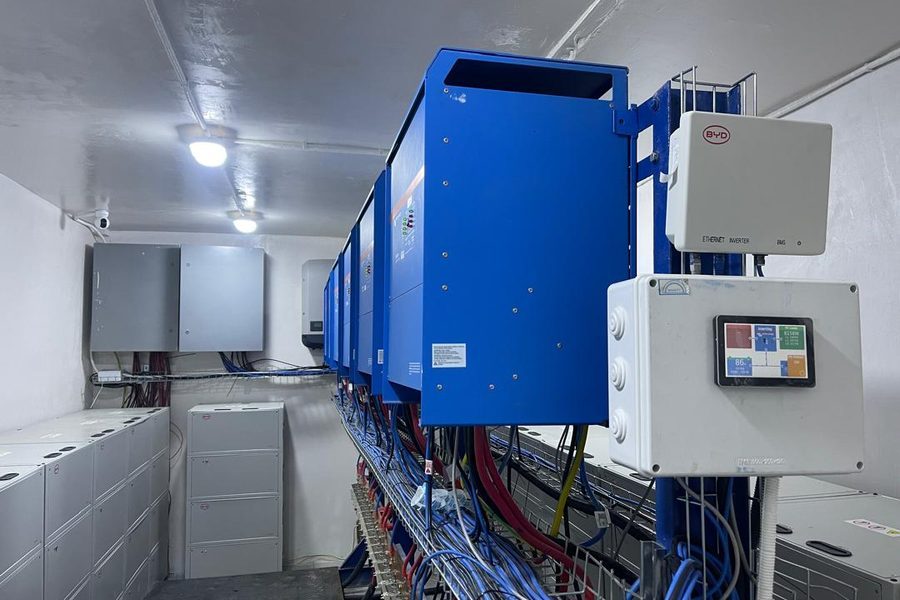
Monguno: Victron–Fronius power room with BYD lithium storage.
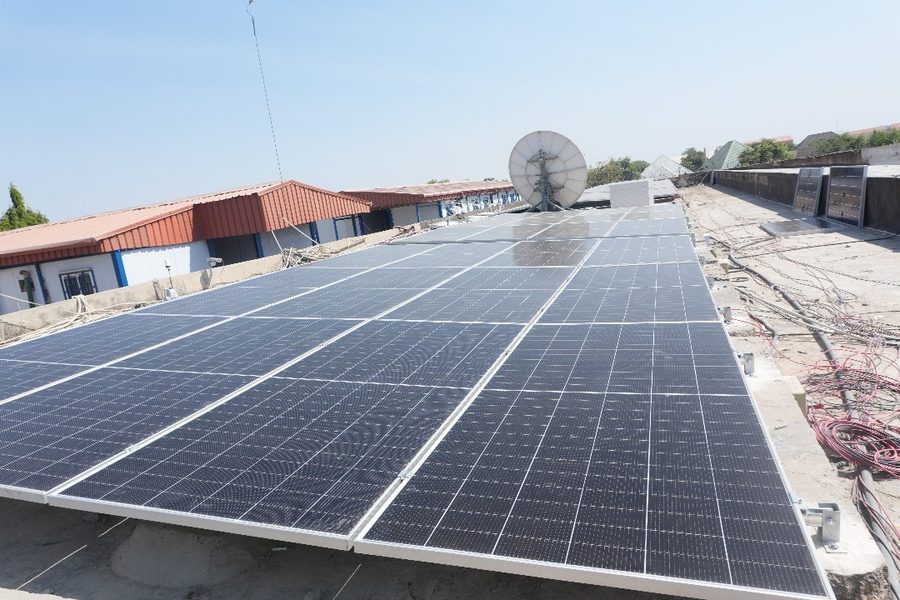
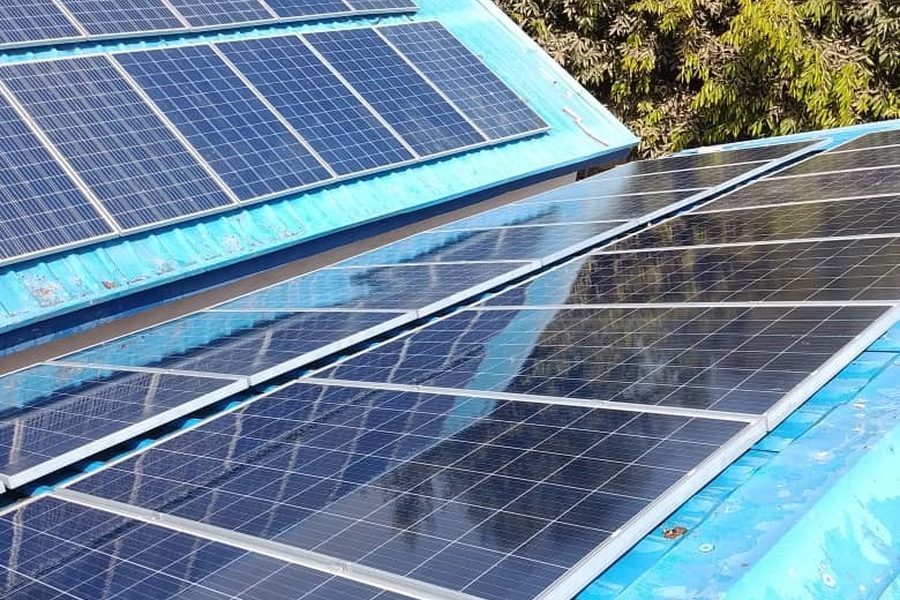
Rooftop arrays at the Maiduguri hub.
Explore each hub

Delivery
• Work started in August 2024. All eight hubs reached practical completion on 31 March 2025, confirmed in the client's completion report.
• Commissioning rolled out from Monguno (November 2024) to Maiduguri (February 2025), re-sequenced around the flood and material delays.
• Every hub was handed over with a commissioning report, operating guide, maintenance schedule and staff training.
Results
Generator use cut to under 5%. The client's completion report records that the solar systems meet the hubs' energy demand and have reduced generator use to less than 5%.
• Quieter hubs, stable power for communications and security, and less fuel moved along insecure roads.
• A three-year O&M contract (2025–2028), run from our Maiduguri regional office.
Rooftop work at the Ngala hub.

Carport and rooftop arrays in Maiduguri.
One of the eight hubs.
One of the eight hubs.
Powering a remote facility?
Talk to the team that delivered eight hubs in Borno.